 Sports · Asia Post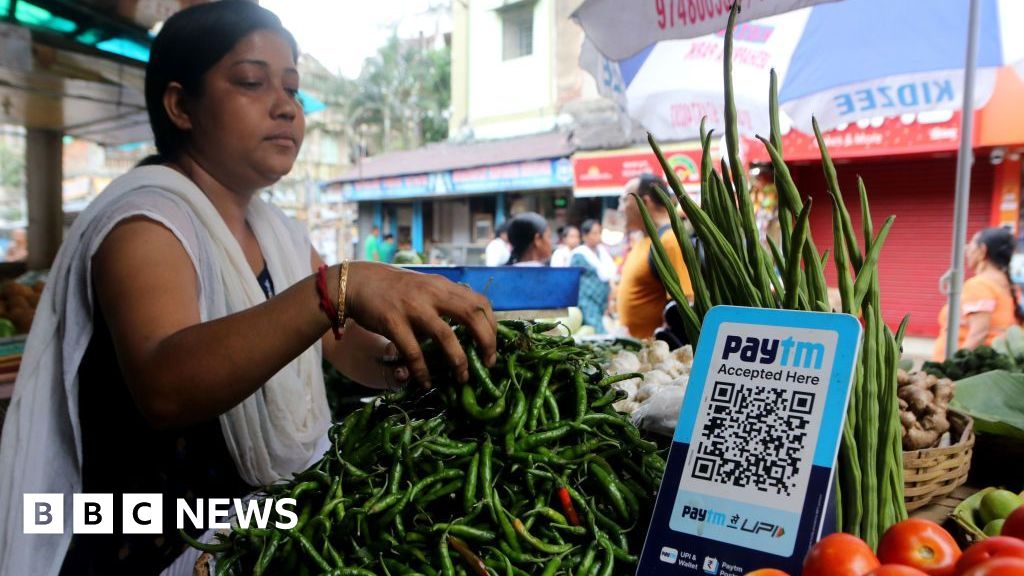
8 minutes ago Nikita Yadav BBC News, Delhi NurPhoto via Getty Images UPI is often called the backbone of India's digital payments system India's decision to introduce a fee on some transactions made through its widely popular digital payments system has sparked a debate over its impact on businesses. The National Payments Corporation of India said on Tuesday that a 0.4% fee will apply from 15 October to certain UPI (Unified Payments Interface) payments above 2,000 rupees (£15; $21) made to businesses by customers. Businesses will have to pay the fee and will not be allowed to pass on the cost to consumers, it said.
The government says the new charge will help keep UPI viable in the long run but experts worry it could raise expenses for businesses and discourage them from using the system. Launched in 2016, UPI allows people to instantly send and receive money through mobile apps. The ease of use has made it integral part of everyday life in India, used by everyone - from small vendors to booming businesses.
Until now, the government, banks and payment companies have largely borne the cost of running and expanding the UPI system. The new charge - known as the Merchant Discount Rate (MDR) - is expected to help cover some of those costs. The government has said that MDR is not a tax or a charge collected by the government or NPCI, which operates the UPI system.
The money will be distributed among payment system providers - including banks - to support operations and continued expansion, the finance ministry press release stated. Getty Images UPI payments system is used across merchants in India from small vegetable vendors to gas stations The charge will not apply to all UPI payments. Person-to-person transfers will remain free, regardless of the amount.
Payments of up to 2,000 rupees made to merchants will also remain free. Merchant payments through QR codes in rural and semi-urban areas will not attract MDR either. The government said "approximately 96% of person-to-merchant transactions will remain unaffected", either because they are below the threshold or because they are covered by the zero-MDR framework for small merchants.
Certain merchant payments above 2,000 rupees, including those for railways, telecom services, insurance, fuel and agricultural inputs, will instead attract a flat charge of five rupees. For other transactions above 2,000 rupees that are subject to MDR, the fee will be 0.4% and capped at 300 rupees per transaction. The cap applies to transactions of 75,000 rupees or more.
The regulator has said the money will support investment in areas including payment infrastructure, resilience, innovation and cyber security. Why cash continues to thrive even as India's digital payments grow India built the world's biggest digital payments miracle. Now comes the bill The decision has sparked debate in India.
Some social media users have said charging merchants could weaken one of UPI's biggest attractions - that it has been free to use. Others have warned that some merchants could turn to cash for larger transactions rather than absorb a fee they did not previously have to pay. Krishnamurthy Subramanian, a former chief economic adviser to the Indian government, said the economics of a system such as UPI cannot be "evaluated using private cost versus private benefit".
Speaking to news channel CNN-News18, Indian entrepreneur Ashneer Grover said that there can be a possibility where "a shopkeeper could simply refuse to accept a UPI payment of 2,000 rupees and ask you to pay entirely in cash. Then you will go back to using cash". Others argue that a fee is needed to help fund and expand the payments system.
"When government funds the subsidies paid for UPI, that amount comes from tax payers' pocket. Moving to market-linked pricing mechanism removes this tax burden and directly links the cost to large businesses which benefit from UPI," said Bipin Preet Singh, CEO of fintech firm MobiKwik. Since its launch a decade ago, UPI has become a central part of India's digital payments economy.
In August, UPI processed a record 24.51 billion transactions worth 29.82 trillion rupees (roughly $311bn), according to NPCI data. The question now is whether the new charges will change how businesses use UPI, particularly for larger payments.
Source: BBC